White Castle Menu Nutrition Facts & Calorie Info
Looking for White Castle Menu with Prices and Calories? Here’s the updated list so you can plan your next meal with confidence.
This section summarizes White Castle nutritional information, so you can read fast food nutrition details at a glance. The White Castle calorie count and white castle menu nutrition data below come from White Castle nutrition PDFs (February 2021 and February 2022), lab testing, USDA data, and supplier details noted by White Castle.
Prices appear next to each popular item so you can compare cost and calories quickly. Original Slider — $0.89. Cheese Slider — $0.99. Double Cheese Slider — $1.69. Bacon Cheese Slider — $1.89. Fish Slider — $1.99. Chicken Ring — $1.69. Veggie Slider — $1.79. Impossible Slider — $2.99. Crave Case (30 sliders) — $29.99. Small French Fries — $1.79. Medium French Fries — $2.19. Large French Fries — $2.79. Cheese Fries — $3.49. Onion Chips — $2.49. Chicken Strips (3 pc) — $4.99. Breakfast Slider — $1.49. French Toast Sticks (4 pc) — $1.99. Classic Brownie — $1.49. Shake (Small) — $2.49. Soft Drink (Small) — $1.19. Coffee (Small) — $1.29.
Serving sizes follow White Castle reporting conventions: slider weights are pre-cooked (for example, Original Slider 55 g). Nutrition values follow FDA rounding rules and include calories, total fat, saturated fat, trans fat, cholesterol, sodium, total carbohydrates, dietary fiber, sugars, protein, and flagged micronutrients where available.
Allergen notes use White Castle markers: X indicates presence of allergens and a “#” appears in official tables for certain entries. Federal exemptions for highly refined oils (like soy oil) mean some oils may not be listed as allergens, so allergy-sensitive diners should contact White Castle at 1-800-THE-CRAVE (1-800-843-2728) or consult foodallergy.org for further guidance.
This introduction frames what follows: clear white castle nutritional information for sliders, chicken and fish options, sides and loaded fries, breakfast, desserts, beverages, and nutrient warnings like sodium and saturated fat. Each menu item includes exact price and calorie detail so we can compare items by nutrient density and cost per calorie.
Expect tables that list Item, Price, Calories, Vegan/Keto/Gluten-Free options, and Allergens. That layout makes it simple to spot lower-calorie slider swaps, plant-based choices like the Impossible Slider, and higher-sodium items to avoid. Use the white castle calorie count to plan a single meal or a full-day intake with confidence.
Readers who want fast food nutrition clarity will find concise entries and practical swaps throughout the article. If specific lab values or supplier changes are critical, reference the official White Castle nutrition guides for the latest updates and to verify any special diet flags before ordering.
Overview of White Castle Menu Nutrition
Looking for clear, usable facts about White Castle menu choices? This overview explains how White Castle presents nutrition for sliders, sides, chicken items, and more so you can make informed decisions.
Nutrition tables list each line item with serving size and a full nutrient panel. Entries include calories, fat calories, total fat (g), saturated fat (g), trans fat (g), cholesterol (mg), sodium (mg), total carbohydrates (g), dietary fiber (g), sugars (g), protein (g), Vitamin A, Vitamin C, Calcium, Iron, and allergen flags. Example entries help users compare items at a glance, such as an Original Slider (55 g) — 140 calories, 7 g fat, 380 mg sodium, 16 g carbs, 6 g protein, and a Cheese Slider (63 g) — 170 calories, 9 g fat, 510 mg sodium, 16 g carbs, 8 g protein. These rows support quick checks of white castle nutritional information and guide choices across white castle menu options while reflecting common concerns in fast food nutrition.
Allergen markers use an “X” to show presence of major allergens like milk, eggs, wheat, soybeans, peanuts, tree nuts, fish, and crustacean shellfish. The official tables include “#” markers where applicable. Highly refined oils derived from major allergens may be exempt from declaration under federal rules. This labeling helps you scan for allergens and plan meals safely.
Sources for the numbers combine accredited lab testing, the USDA Nutrient Database, and supplier data. Values follow FDA rounding rules. Weights listed for sliders are pre-cooking. Sodium and other values can vary by location because of water and preparation differences. Regional or limited-time items may not appear in every table. These notes explain how white castle nutritional information is derived and why small variations are normal in fast food nutrition.
The table below highlights representative slider entries, portion weights, calories, and allergen flags so you can compare at a glance.
| Item | Serving Size | Calories | Total Fat (g) | Sodium (mg) | Protein (g) | Allergens |
|---|---|---|---|---|---|---|
| Original Slider | 55 g | 140 | 7 | 380 | 6 | Wheat, Soy, Milk |
| Cheese Slider | 63 g | 170 | 9 | 510 | 8 | Wheat, Soy, Milk |
| Original Slider (NY/NJ variant) | 60 g | 150 | 8 | 420 | 6 | Wheat, Soy, Milk |
White Castle cautions that recipe changes, supplier substitutions, and assembly at the restaurant can alter nutrition. For allergy concerns or questions about regional offerings, contacting the company directly is recommended. This approach keeps white castle menu options transparent and supports consumer trust when comparing fast food nutrition across brands.
Calories and Portion Sizes Across Popular Sliders
Want to know the exact numbers before you order? This section breaks down common slider choices. You can compare calories, sodium, fat, and portion size easily. The white castle calorie count and white castle menu nutrition data below reflect official slider entries and widely reported values for plant-based and specialty items.
Original sliders are small but pack a punch in calories and sodium. Regional weight differences cause small shifts in totals. Adding cheese, bacon, or doubling patties raises calories and sodium quickly.
The plant-based and specialty sliders have their own ingredient lists and nutrient patterns. The Impossible Slider and fish options often show higher sodium and fat than a single Original. Use these white castle food facts to weigh swap decisions when building a meal.
Original and Cheese Slider calorie breakdown
Here are representative values drawn from White Castle nutrition tables and public summaries. Regional variants like New York/New Jersey tend to add a few grams and modest sodium increases.
| Item | Portion Weight | Calories | Total Fat (g) | Sodium (mg) | Carbs (g) | Protein (g) | Allergens |
|---|---|---|---|---|---|---|---|
| Original Slider | 55 g | 140 | 7 | 380 | 16 | 6 | Wheat, onion note |
| Original Slider (NY/NJ) | 60 g | 150 | 7 | 420 | 17 | 6 | Wheat, onion note |
| Cheese Slider | 63 g | 170 | 9 | 510 | 16 | 8 | Egg, dairy, wheat, soybean |
| Cheese Slider (NY/NJ) | 67 g | 170 | 9 | 550 | 17 | 8 | Egg, dairy, wheat, soybean |
| Double Original | 98 g | 250 | 13 | 690 | 24 | 11 | Wheat, onion note |
| Double Cheese | 113 g | 300 | 17 | 960 | 24 | 14 | Egg, dairy, wheat, soybean |
Plant-based and specialty slider nutrition
The Impossible Slider and fish or panko variants present a different nutrient mix. Typical consumer-referenced values show elevated sodium and moderate fat compared with single beef sliders.
| Item | Approx. Calories | Approx. Total Fat (g) | Approx. Sodium (mg) | Carbs (g) | Protein (g) | Notes |
|---|---|---|---|---|---|---|
| Impossible Slider (typical) | 190 | 10 | ~530 | 16 | 8 | Values vary by region; plant-based listing separate in official PDFs |
| Panko Fish Slider (example) | ~320 | ~20 | 320–490 | Varies | Varies | Sodium depends on toppings and regional prep |
| Specialty Slider with Add-ons | Varies | Increases with cheese/bacon | Often 100–400 mg higher | Varies | Increases with extra patties | Doubling patties raises protein and sodium markedly |
Use these white castle menu nutrition figures when you plan an order. The white castle food facts above help you decide which slider fits your calorie and sodium targets.
White Castle Menu Nutrition for Chicken, Fish and Veggie Options
Want to know about chicken, fish, and veggie choices at White Castle? This section gives you the facts. You’ll learn about the white castle nutritional information to make smart choices.
Chicken options are crispy or grilled. The Crispy Chicken with Cheese has about 230 calories. It has 10 g of fat, 620 mg of sodium, 22 g of carbs, and 11 g of protein. Adding bacon or extra cheese increases calories, fat, and sodium.
A Crispy Chicken & Waffles has near 350 calories. It has about 18 g of fat and roughly 650 mg of sodium. Remember, different locations have different sizes and recipes.
Fish sandwiches have more fat and calories than sliders. A Panko Fish Slider has around 320 calories and about 20 g of fat. Sodium varies, usually between 320 and 490 mg for fish sliders. These numbers are common across many White Castle locations.
Veggie and plant-based sliders are lower in calories. The plain Veggie Slider has near 190 calories, about 10 g of fat, and 320 mg of sodium. It has 22 g of carbs and 5 g of protein. Impossible Slider variants with cheese have 220–230 calories and sometimes more than 530 mg of sodium.
Use the quick comparison below to scan calories, main nutrient values, and common allergen notes for representative chicken, fish, and veggie choices.
| Item | Price (typical) | Calories | Fat (g) | Sodium (mg) | Carbs (g) | Protein (g) | Vegan/Keto/Gluten-Free Options | Allergens |
|---|---|---|---|---|---|---|---|---|
| Crispy Chicken with Cheese | $2.19 | 230 | 10 | 620 | 22 | 11 | No / No / No | Wheat, Dairy |
| Chicken & Waffles (Crispy) | $3.49 | 350 | 18 | 650 | 36 | 12 | No / No / No | Wheat, Egg, Dairy |
| Panko Fish Slider | $2.69 | 320 | 20 | 320–490 | 28 | 13 | No / No / No | Wheat, Fish |
| Veggie Slider (Plain) | $1.99 | 190 | 10 | 320 | 22 | 5 | Vegetarian option / No / No | Wheat, Soy |
| Impossible Slider with Cheese | $2.39 | 220–230 | 11–13 | ~530+ | 20–24 | 12–15 | Plant-based / No / No | Soy, Dairy |
For healthy eating at White Castle, choose plain or grilled items. Skip extra sauces and opt for lettuce and tomato instead. Always check the white castle nutritional information for your exact order, as sizes and toppings can vary.
Sides, Fries and Loaded Options Nutrition Details
White Castle fans often pick sides to complement sliders. This section breaks down typical fries and loaded options so you can match taste with nutrition. The figures reflect regional recipe and portion differences reported in White Castle nutrition guides.
Small fries often fall in the 330–430 calorie range. Regional prep and seasonal recipes change calories and sodium. Portion size shifts matter most when you track a meal.
Cheese fries add notable fat and sodium. Reported examples sit near 400–470 calories. In some serving sizes, cheese contributes roughly 290–320 calories from fat. Sodium ranges widely, from about 350 mg up to 1,110 mg depending on portion and recipe.
Loaded fries combine toppings that increase calories and salt. Typical product summaries list them around 460 calories with fat near 38 g and sodium approaching 900 mg in some cases. Sloppy Fries, offered periodically, often measure about 380–400 calories with sodium between roughly 670–1,110 mg depending on regional servings.
Toppings, cheese portions, and sauces drive most variation. White Castle’s official PDFs supply gram weights and nutrient totals for each fry item. Restaurant-level assembly can alter the final numbers.
| Item | Price (est.) | Calories | Fat (g) | Typical Sodium (mg) | Allergens |
|---|---|---|---|---|---|
| Small French Fries | $1.79–$2.49 | 330–430 | 14–20 | 200–500 | None major; cooked in shared fryers (may contact milk) |
| Cheese Fries | $2.99–$4.49 | 400–470 | 24–32 | 350–1,110 | Dairy (cheese), possible cross-contact with wheat |
| Loaded Fries (bacon/cheese) | $3.99–$5.49 | ≈460 | ≈38 | ≈700–900 | Dairy, pork; shared equipment risk |
| Sloppy Fries (limited time) | $3.49–$4.99 | 380–400 | 18–28 | 670–1,110 | May contain dairy and soy; regional sauce recipes vary |
For meal planning, use a quick white castle meal analysis: compare slider calories with chosen side to estimate totals. White Castle food facts in official guides list precise grams for fat and sodium so you can fine-tune swaps.
- Tip: Choose a small fry and skip extra cheese to lower calories and sodium.
- Tip: Share a loaded order to reduce per-person fat and sodium intake.
- Tip: Check the local nutrition PDF before ordering when sodium control matters.
Breakfast Menu Nutrition: Calories, Fat and Sodium
Start your morning with clear numbers so you can plan meals around taste and nutrition. This section breaks down typical breakfast choices from White Castle with an eye on calories, fat and sodium. Use these figures to compare items and pick options that match your goals.
Breakfast Sliders and Toast Sandwiches
Breakfast sliders offer compact portions but can pack notable fat and sodium. A Breakfast Slider with Egg & Cheese runs about 200 calories, near 12 g fat and roughly 370 mg sodium. The Sausage, Egg & Cheese slider rises to about 350–360 calories with 24–26 g fat and up to 710 mg sodium.
The Toast Sandwich with Sausage, Egg & Cheese is larger at roughly 420–430 calories, about 25–28 g fat and 850–880 mg sodium. Saturated fat and cholesterol jump with processed meats such as sausage and bacon. These values reflect the white castle menu nutrition listings and show typical trade-offs between portion size and nutrient load.
Waffle Breakfast Items and Variations
Waffle-style breakfast items blend sweet and savory elements. A Waffle Breakfast Slider with Egg & Cheese typically contains about 330–340 calories, near 21 g fat and 390–410 mg sodium. When sausage is added, a Waffle with Sausage & Egg can reach about 490 calories and roughly 36 g fat with near 730 mg sodium.
Regional menu differences and limited-time offers can change weight and sodium content. White Castle cautions that actual servings may vary, so use the white castle nutritional value tables for precise planning when possible.
| Item | Price | Calories | Vegan/Keto/Gluten-Free Options | Allergens |
|---|---|---|---|---|
| Breakfast Slider: Egg & Cheese | $1.79 | ~200 | No / No / No | Dairy, Egg, Wheat |
| Breakfast Slider: Sausage, Egg & Cheese | $2.79 | ~350–360 | No / No / No | Pork, Dairy, Egg, Wheat |
| Toast Sandwich: Sausage, Egg & Cheese | $3.99 | ~420–430 | No / No / No | Pork, Dairy, Egg, Wheat |
| Waffle Slider: Egg & Cheese | $2.49 | ~330–340 | No / No / No | Dairy, Egg, Wheat |
| Waffle with Sausage & Egg | $4.29 | ~490 | No / No / No | Pork, Dairy, Egg, Wheat |
Quick tips: choose egg-and-cheese sliders to lower calories and sodium. Skip sausage or ask for reduced-fat cheese to cut saturated fat. Check the white castle menu nutrition PDFs when planning meals for strict dietary needs.
For an at-a-glance reference, the white castle calorie count and the white castle nutritional value entries provide the official nutrient breakdowns. Use them to compare items and control daily intake without giving up favorite flavors.
Desserts and Beverages Nutrition Overview
Sweet endings and drink choices can change a meal’s nutrition quickly. This section explains common dessert servings and beverage ranges in White Castle menu options. This way, you can match your cravings with your calorie goals.
Popular desserts include Gooey Butter Cake, fudge-dipped brownies, and various cheesecakes or dessert-on-a-stick. The Gooey Butter Cake has about 220 calories, with 90 calories from fat. It has 31 g total carbs and 3 g protein.
The fudge-dipped brownie has 240–250 calories, with 33–34 g carbs. It also has 110–140 fat calories, depending on the portion size.
Smaller cheesecakes and stick desserts are between 150 and 250 calories. These figures are based on typical portions in White Castle food facts. They help when comparing treats across fast food nutrition guides.
Shakes vary a lot by size and region. Small or regional servings are near 460 calories. Large or specialty shakes can exceed 1,200 calories. The exact total depends on the recipe, mix-ins, and serving size. Treat shake orders as a high-calorie choice unless you check local nutrition panels.
Fountain drinks, iced tea, and brewed coffee can be low-calorie options when unsweetened. Adding syrups, creamers, or choosing sweetened iced tea raises sugar and sodium. White Castle provides Coca-Cola product details from The Coca-Cola Company for precise soft drink values.
| Item | Price | Calories | Vegan/Keto/Gluten-Free | Allergens |
|---|---|---|---|---|
| Gooey Butter Cake | $2.19 | ~220 | No / No / No | Dairy, Wheat |
| Fudge-Dipped Brownie | $1.99 | 240–250 | No / No / No | Dairy, Wheat, Eggs |
| Cheesecake Slice (varies) | $2.49 | 150–250 | No / No / No | Dairy, Wheat |
| Small Shake (example) | $3.49 | ~460 | No / No / No | Dairy |
| Large Shake (regional) | $5.49 | 1,200+ | No / No / No | Dairy |
| Fountain Beverage (12 oz) | $1.29 | 0–150 | Some options / Yes / Some | None typical; varies by syrup |
| Iced Tea (unsweetened, 12 oz) | $1.19 | 0–5 | Yes / Yes / Yes | None |
| Coffee (black, 12 oz) | $1.49 | ~5 | Yes / Yes / Yes | None; creamer adds dairy |
When tracking fast food nutrition, note that sodium and sugar differ by recipe and water supply. White Castle food facts mention local variations. So, use store-specific tables for exact numbers.
For lighter choices, pick smaller dessert portions or unsweetened beverages. If you want a treat, comparing desserts and drink sizes in the White Castle menu options makes it easier to balance flavor with nutrition goals.
Sodium, Fat and Other Nutrients to Watch
Looking at white castle nutritional information helps you focus on key nutrients. This includes sodium, fat, and a few others that affect your daily intake. A white castle meal analysis can help you identify high-impact items. It also guides you in making swaps that align with your dietary goals.
High-sodium items and typical ranges
Many sandwiches and fries have 500–1,200 mg sodium per serving. Single sliders are lower, but doubles or large ones have 900–1,100 mg. Loaded fries and combo meals increase sodium levels even more.
Ordering a sandwich, side, and drink can lead to a meal with over 1,800–2,700+ mg sodium. White Castle notes that sodium levels can vary by location and preparation. So, the nutrition PDFs are a good guide for meal planning.
Fat, saturated fat and cholesterol considerations
Double sliders, cheese-heavy items, bacon, and loaded fries are high in total and saturated fat. For example, a Double Cheese slider has about 17 g total fat, with almost 8 g saturated fat.
Breakfast sausage and bacon items also add saturated fat and cholesterol. White Castle tables show cholesterol per item, with most sliders having 10–40 mg. This depends on size and type.
Other nutrients and practical guidance
Protein varies by patty: an Original Slider has about 6 g, while a Double Cheese has around 14 g. Buns, waffles, and desserts increase carbohydrates and sugar, raising calorie counts quickly.
Use white castle meal analysis to track nutrient targets. Be careful with doubles, combos, and loaded sides when watching sodium and saturated fat. This is important for a 2,000-calorie diet.
| Item | Price | Calories | Vegan/Keto/Gluten-Free Options | Allergens |
|---|---|---|---|---|
| Original Slider (single) | $1.29 | 140 | None | Wheat, Soy |
| Double Cheese Slider | $2.49 | 300 | None | Wheat, Dairy, Soy |
| Loaded Fries | $3.99 | 590 | No | Dairy, Soy |
| Plant-Based Slider | $2.79 | 180 | Vegan option available | Wheat, Soy |
| Breakfast Sausage Slider | $1.79 | 240 | No | Wheat, Pork, Soy |
- Check white castle nutritional information before ordering combos.
- Prioritize single sliders and plant-based options for lower sodium and saturated fat.
- Limit loaded sides and doubles when tracking daily nutrient targets.
Allergens, Ingredient Notes and Food Safety
White Castle makes it easy to know about allergens in their food. They list the eight major allergens in their nutrition guides. This way, you can check the white castle nutritional information before you order.
They also note any special preparation that might affect the ingredients. This section will cover the allergens, cross-contact risks, and how to get answers for food sensitivities.
Allergen labeling used by White Castle
White Castle clearly labels milk, eggs, wheat, soybeans, peanuts, tree nuts, fish, and crustacean shellfish in their guides. An “X” in a row means the allergen is in that item. A “#” in some entries means there’s a special note about cooking or ingredients.
For example, the Cheese Slider has Xs for egg, dairy, wheat, and soybean. This helps you understand the white castle food facts.
Many sliders, like the Original and Double Original, list wheat as an allergen. They might also have a “#” for cooking or onion handling. These signs help you avoid surprises when planning your meal.
Cross-contact and shared kitchen disclaimer
All White Castle food is made in shared kitchens with common equipment. This means there’s a risk of cross-contact with allergens, even if an allergen isn’t listed. Refined oils, like soybean oil, might not be labeled as allergens.
If you have a severe allergy, call White Castle for the latest information. They don’t take responsibility for allergic reactions. You can call 1-800-THE-CRAVE for specific questions and check the Food Allergy and Anaphylaxis Network for more help.
| Item | Common Allergens Noted | Cross-Contact Risk | Advice |
|---|---|---|---|
| Cheese Slider | Egg, Dairy, Wheat, Soybean | High — shared prep surfaces and fryers | Avoid if you have a dairy or egg allergy; call for prep details |
| Original Slider | Wheat, Soybean | Moderate — possible onion handling notes (#) | Ask staff about grill handling and substitutions |
| Plant-Based Slider | Wheat, Soybean (depends on recipe) | Moderate to High — made in same kitchen as meat items | Verify current white castle menu nutrition table and prep methods |
| Fries | May contact wheat or soy via shared fryers | High — shared oil and utensils | Confirm oil source and ask if dedicated fryers are used |
Use the white castle nutritional information and food facts to plan your meals. Always check the latest menu nutrition tables. If you have any questions, contact guest services.
Making Healthier Choices on the White Castle Menu
For those looking to balance taste and health, this guide offers practical tips. It helps you make better choices on the White Castle menu. These suggestions are perfect for those who want to enjoy White Castle’s tasty food without compromising on health.
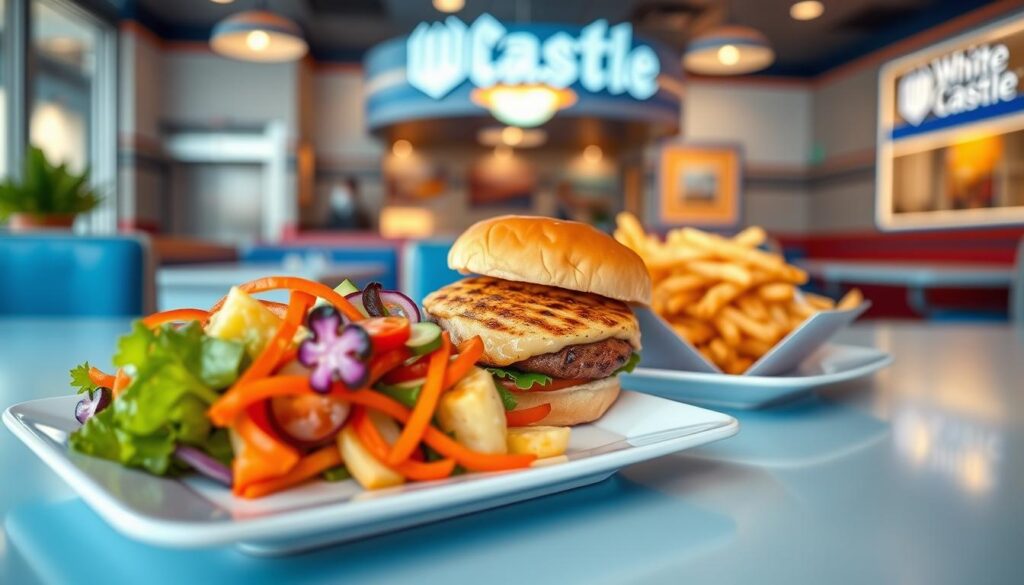
Opt for a single Original Slider (about 140 calories) instead of a double. This move cuts calories, fat, and sodium. A Double Original has around 250 calories, while a Double Cheese has about 300.
Go for the Impossible Slider or a Veggie Slider without cheese to reduce saturated fat and cholesterol. Both are around 190 calories and offer good protein for the calories compared to fried foods.
Switch to a small fry or share a regular order. Small fries have 330 to 430 calories. This is a quick way to cut down on total calories.
Customizations and portion control tips
Removing cheese or bacon saves about 30 calories and 140–180 mg of sodium per slice. These small changes add up over a meal.
Be cautious with onions, as some sliders have them cooked in and hard to remove. For a true onion-free option, choose items without onions in the official guides.
Share loaded fries or pair one slider with a side salad or fruit cup. This balances calories and increases nutrient density without feeling deprived.
| Item | Price (approx.) | Calories | Vegan/Keto/Gluten-Free Options | Allergens |
|---|---|---|---|---|
| Original Slider (single) | $1.29 | 140 | Not vegan; not keto; not gluten-free | Dairy (if cheese added), Wheat, Soy |
| Double Original Slider | $2.49 | 250 | Not vegan; not keto; not gluten-free | Dairy (if cheese added), Wheat, Soy |
| Impossible Slider (no cheese) | $2.19 | 190 | Vegetarian; not keto; not gluten-free | Wheat, Soy |
| Veggie Slider (plain) | $1.99 | ~190 | Vegetarian; not vegan if cheese added; not gluten-free | Wheat, Soy |
| Small French Fries | $1.79 | 330–430 | Not vegan in some kitchens; not keto; not gluten-free | May contain cross-contact with wheat |
| Loaded Fries (shared) | $3.99 | ~650 (full order) | Not vegan; not keto; not gluten-free | Dairy, Wheat, Soy |
| Side Salad (regional) | $2.49 | 40–80 | Can be vegan with no dressing; not keto depending on toppings | Varies by dressing |
Use a simple white castle meal analysis to compare protein-per-calorie before ordering. Choose items with higher protein density for better satiety and muscle support.
Small changes like single sliders, no cheese, and shared sides make healthy eating at White Castle doable. Apply these tips to keep your meals satisfying and in line with your nutrition goals.
Meal Examples and Calorie Count Comparisons
Want to see how White Castle meals add up? We’ll look at real menu items to show totals, sodium, and nutrient density. This way, you can plan meals with confidence. We’ll compare lighter builds with indulgent combos and highlight protein and calorie differences.
Typical lighter meal build:
An Original Slider (140 cal) with small fries (~330 cal) totals about 470 calories. Sodium might be around 710 mg, depending on the fry seasoning. This combo shows a balanced portion for casual meals.
Example indulgent meal build:
A Double Cheese (300 cal) with Cheese Fries (~400–470 cal) and a large shake (500–1,220+ cal) can exceed 1,200–2,000 calories. This combo increases saturated fat and sodium, showing less nutritional value per calorie.
When choosing sliders and sides, compare protein density and nutrient quality. Double sliders, grilled chicken, and Impossible patties offer more protein per calorie. Large shakes, loaded fries, and desserts have high sugars and fats with little protein.
Use official serving sizes and grams to match meal choices with daily targets. White Castle suggests a 2,000-calorie example for guidance. This helps you align portions with goals and limits for sodium, fat, and sugar.
| Item | Price | Calories | Vegan/Keto/Gluten-Free | Allergens |
|---|---|---|---|---|
| Original Slider | $1.29* | 140 | Not vegan / Not keto / Contains gluten | Dairy (mayonnaise variants), Wheat, Soy |
| Double Cheese Slider | $2.79* | 300 | Not vegan / Not keto / Contains gluten | Dairy, Wheat, Soy |
| Small French Fries | $2.19* | ~330 | Vegan option varies / Not keto / Contains gluten | Wheat (cross-contact possible), Soy |
| Cheese Fries | $3.49* | 400–470 | Not vegan / Not keto / Contains gluten | Dairy, Wheat, Soy |
| Impossible Slider | $2.99* | ~140–170 | Vegan-ready with customization / Not keto / Contains gluten | Soy, Wheat, May contain dairy if cheese added |
| Grilled Chicken Slider | $2.49* | ~120–150 | Not vegan / Lower carb than fried / Contains gluten | Wheat, Soy |
| Large Shake (regional) | $4.49–$6.99* | 500–1,220+ | Not vegan / Not keto / Contains dairy | Dairy, Eggs (flavor-dependent), Soy |
| Loaded or Specialty Fries | $4.49–$5.99* | 600–900 | Not vegan / Not keto / Contains gluten | Dairy, Wheat, Soy, Possible nuts |
*Prices vary by location. Calorie and allergen data reflect common preparations and menu standards but can change by region.
- Choose items with higher protein-to-calorie ratios for better satiety: Double Cheese or grilled chicken slider options raise protein-per-calorie.
- Cut back on shakes and loaded fries to lower empty calories and sugar load; these items reduce overall white castle nutritional value for the calorie intake.
- Track sodium when pairing fries and sliders. Many combos approach or exceed a large share of daily sodium recommendations.
white castle menu nutrition
Looking for clear guidance on White Castle food facts and how to use them? This section points you to official resources and shows practical ways to plan meals using the brand’s published tables. You’ll find serving sizes, calories, macronutrients, and allergen flags that make choices easier.
Where to find the official nutrition guides
White Castle posts nutrition PDFs that list serving size (g), calories, fat, sodium, carbs, protein, and allergens. The February 2021 and February 2022 PDFs include most sliders, breakfast items, sides, desserts, and beverages.
Regional entries such as New York and New Jersey show slight weight and nutrient differences. Look for footnotes marked with “#” in those tables to spot exceptions. If an item is missing, request updated information directly from White Castle customer service.
How to use the official tables for meal planning
Start by comparing serving sizes in grams or ounces against the calories, sodium, and fat columns. That helps you keep meals within daily targets on a 2,000-calorie reference or your customized goal.
Use allergen columns to identify milk, egg, wheat, soy, fish, shellfish, peanuts, and tree nuts. Pay attention to cross-contact notes and regional variations when ordering in different states.
Below is a compact sample of how entries appear and how they can guide swaps. It lists common slider and side items with price examples, calories, dietary option flags, and top allergens for quick comparison.
| Item | Price | Calories | Vegan/Keto/Gluten-Free Options | Allergens |
|---|---|---|---|---|
| Original Slider (single) | $1.19 | 140 | None | Wheat, Milk |
| Cheese Slider (single) | $1.39 | 180 | None | Wheat, Milk |
| Plant-Based Slider (Impossible) | $2.49 | 340 | Vegan option available | Wheat, Soy |
| Chicken Rings (6 pcs) | $3.99 | 260 | None | Wheat, Egg, Milk |
| French Fries (small) | $1.79 | 310 | Not keto or gluten-free | None listed |
| Loaded Fries (cheese & bacon) | $3.99 | 700 | None | Milk, Pork |
| Breakfast Slider (sausage & egg) | $2.29 | 300 | None | Wheat, Egg, Milk |
| Classic Shake (small) | $2.79 | 410 | None | Milk |
| Garden Side Salad | $2.99 | 70 | Can be gluten-free | None listed |
Use these comparisons to swap higher-sodium or higher-fat items for lighter choices. Track totals by adding calories and sodium across items to meet your daily targets. For up-to-date white castle nutritional information and deeper white castle food facts, consult the official PDFs before ordering.
How White Castle Reports Nutrition and Important Disclaimers
White Castle gives detailed nutritional information for those planning meals. They use lab tests, supplier data, and federal databases to create nutrition tables. These numbers are estimates to help with meal planning.
White Castle bases its nutrition facts on lab tests, the USDA database, and supplier info. They follow FDA rules and labeling laws. Slider weights are before cooking, which affects calorie counts.
Nutrition facts include calories, fat, sodium, and macronutrients. White Castle also notes variations in cooked weight and serving sizes. This helps compare different menu items.
Legal and health disclaimers
Nutrition facts are based on standard recipes and typical assembly. Actual values can change due to supplier changes, recipe updates, or in-restaurant preparation. Some items, like limited-time or regional ones, might not be listed.
White Castle can’t guarantee safety for everyone, due to food allergies or sensitivities. People with health concerns should talk to a doctor before relying on nutrition data. For allergy or ingredient questions, call 1-800-THE-CRAVE or check the Food Allergy & Anaphylaxis Network.
Federal rules might not require labeling for highly refined oils. White Castle warns those avoiding these oils to seek medical advice. Sodium content can also vary by location, due to local water supplies.
| Source | What It Covers | Notes |
|---|---|---|
| Accredited labs | Measured calories, macronutrients, sodium | Reflects finished food tested under standard conditions |
| USDA Nutrient Database | Baseline nutrient values for raw ingredients | Used for composite calculations and cross-checks |
| Supplier data | Ingredient specifics and formulations | Subject to supplier changes and regional differences |
| Federal labeling rules | Rounding and presentation standards | Determines how values appear on white castle menu nutrition sheets |
Use this info as a guide for fast food choices. It’s helpful for meal planning, but not a substitute for medical advice.
Conclusion
This guide covers the main points about White Castle menu nutrition. You can plan meals with confidence using White Castle’s official PDFs from Feb. 2021 and Feb. 2022. These PDFs provide details on calories, fat, sodium, carbs, and allergens.
Keep in mind that regional and limited-time recipe changes can affect some sliders. For example, New York and New Jersey have slightly higher grams and sodium.
For healthier choices, go for single sliders or plant-based and plain veggie options. These choices can lower saturated fat and calories. Avoid extra cheese, bacon, and loaded sides to control the calorie count.
Remember, portion control and simple swaps can make a big difference. You don’t have to give up flavor.
If you have food sensitivities, check the official tables or call 1-800-THE-CRAVE before ordering. White Castle nutritional information is a reliable tool for planning. But, remember that preparation, local recipes, and serving sizes can change totals.
Use the provided tables and contact White Castle for the latest data.